
Redefining Efficiency in Textile Manufacturing
Efficiency in a high-volume textile environment is measured by the velocity of the “order-to-ship” cycle. Traditional manual cutting methods, once the backbone of the industry, are now the primary source of material waste and production delays. When analyzing how to optimize throughput, the focus must shift toward minimizing idle time and maximizing material yield.
To remain competitive, modern manufacturing hubs are increasingly turning to automated solutions, positioning themselves among the Top 10 Factories for High-Efficiency Textile Cutting Tables in the World. Achieving peak performance in these environments requires more than just speed; it demands a holistic integration of hardware robustness and software intelligence. For enterprises seeking to scale their operations, finding the right intelligent cutting system is no longer an option—it is a strategic imperative for survival in a high-throughput economy.
Hangzhou IECHO Science & Technology Co., Ltd. (IECHO), a global leader in intelligent cutting solutions listed on the stock market (Stock code: 688092), has spent decades addressing these specific challenges. With a massive manufacturing base exceeding 60,000 square meters and a workforce where over 30% are dedicated to Research and Development, the company has engineered systems specifically designed to handle the rigors of 24/7 production environments. By examining the IECHO GLSC Automatic Multi-layer Cutting System, we can identify five core pillars that drive industrial throughput.
Answer 1. High-Frequency Oscillation: The Foundation of Cutting Velocity
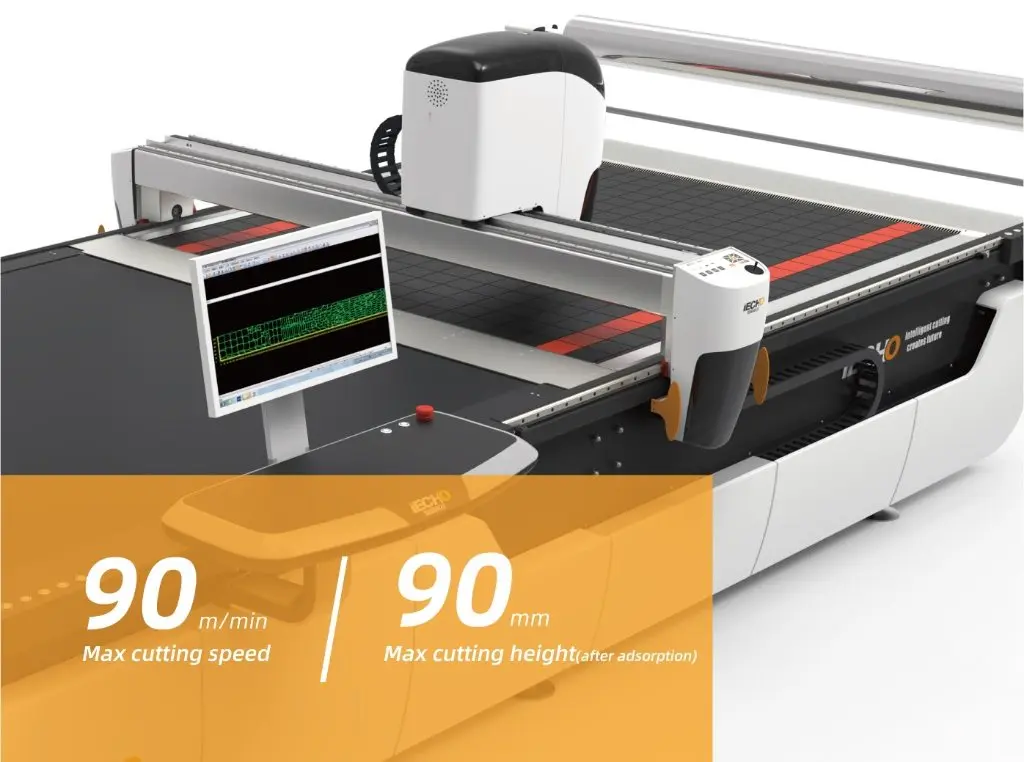
At the mechanical level, throughput starts with the cutting tool’s ability to penetrate and move through dense layers of fabric without resistance. The IECHO GLSC system utilizes high-frequency vibration tool technology, where the knife oscillates at speeds up to 6000rpm.
This high-speed mechanical action allows the blade to slice through multiple plies of fabric—from delicate silks to heavy-duty denims—with minimal friction. In high-volume production, this translates to faster linear cutting speeds. Because the tool can maintain its velocity even when navigating complex patterns or thick material stacks, the processing time per marker is significantly reduced. This hardware advantage ensures that the physical limitations of the fabric do not become a barrier to the factory’s overall output capacity.
Answer 2. Algorithmic Intelligence and Path Optimization
If the hardware is the muscle, the software is the brain. Even the fastest cutting head is inefficient if it travels unnecessary distances between patterns. IECHO’s proprietary cutting software employs advanced algorithms to calculate the most efficient path for every job.
Path optimization serves two critical functions. First, it minimizes “idle time”—the moments when the cutting head is moving but not actually cutting. By streamlining the sequence of operations, the software ensures the machine is productive for the highest possible percentage of its operating cycle. Second, the system features real-time dynamic correction and intelligent tool compensation. As the blade interacts with different fabric densities, the software adjusts the cutting angle and pressure instantaneously. This prevents distortions in the fabric, eliminating the need for recuts or manual adjustments, which are common throughput killers in traditional setups.
Answer 3. Maximizing Multi-Layer Integrity and Vacuum Stabilization
In high-volume scenarios, the goal is to cut as many layers as possible in a single pass. However, as layers increase, so does the risk of material shifting or the “bowing” effect, where top and bottom layers differ in size.
The GLSC system addresses this through a sophisticated vacuum suction environment. By utilizing a zoned vacuum system, the machine compresses the textile stack into a solid, stable mass. The system maintains ‘zero-gap’ cutting precision even for high-thickness materials during the process. When patterns can be placed edge-to-edge without a safety buffer, the material utilization rate increases significantly. This dual benefit of higher density per cut and less waste per roll directly boosts the total volume of finished pieces emerging from the production line every hour.
Answer 4. Seamless Continuous Operation and Workflow Integration
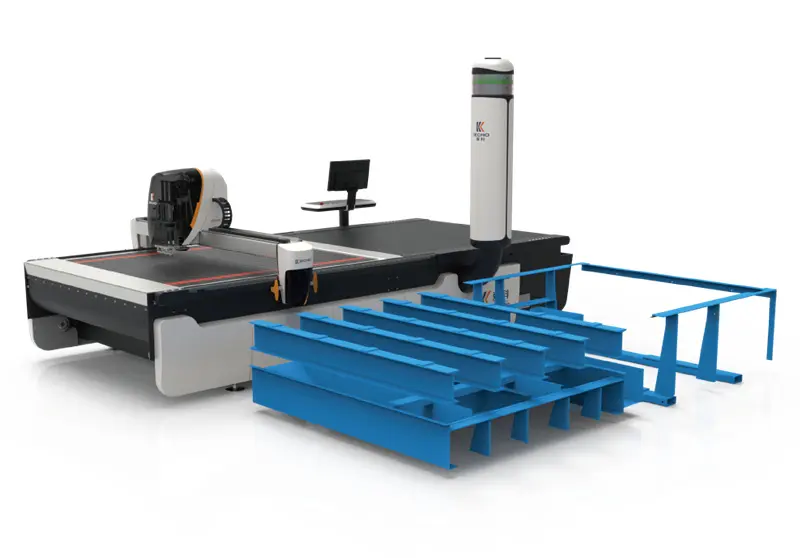
The most significant drain on throughput is machine downtime during loading and unloading. To counter this, IECHO has designed the GLSC with a conveyorized table system that facilitates a “continuous flow” model.
This architecture allows for simultaneous feeding, cutting, and collecting. While the cutting head is working on one section of the marker, the operator can clear finished pieces from the discharge conveyor, and the automatic feeding system can prepare the next roll of fabric. This synchronization transforms the cutting process from a batch operation into an assembly-line flow. Furthermore, by integrating with enterprise ERP and MES systems, the GLSC allows for seamless order switching. The transition from one design to another happens digitally, reducing the setup time that traditionally plagued high-variety, high-volume production schedules.
Answer 5. Thermal Management and Predictive Maintenance
Sustainability of throughput is just as important as the peak rate. In high-intensity environments, heat buildup in the cutting tool can lead to “fusion” in synthetic fibers, where the edges of the fabric melt and stick together. The GLSC system incorporates an active tool cooling system that regulates temperature during high-speed operation, ensuring that even under heavy loads, the material quality remains pristine and the machine does not need to slow down to prevent overheating.
Beyond thermal control, the system includes intelligent self-diagnostics. By monitoring the status of consumables and mechanical components in real-time, it provides predictive maintenance alerts. This proactive approach ensures that maintenance is scheduled during planned shifts rather than resulting from unexpected breakdowns, thereby protecting the factory’s long-term throughput targets.
Conclusion
Optimizing throughput in high-volume textile production is a multifaceted challenge that requires a synergy of mechanical power, mathematical precision, and operational continuity. Through the technological innovations found in the GLSC system, IECHO demonstrates that high output does not have to come at the expense of quality. By focusing on high-speed oscillation, intelligent path planning, and continuous workflow, manufacturers can achieve a level of efficiency that meets the demands of the modern global market.
As IECHO continues to expand its footprint across more than 100 countries, its commitment to high-quality service and customer-led innovation remains the cornerstone of its development. For enterprises looking to redefine their production capabilities, the integration of such intelligent cutting technology is the most direct route to creating sustainable value and operational excellence.
For more information on intelligent cutting solutions, visit: https://www.iechocutter.com