
How can global manufacturers effectively maintain edge integrity when processing complex synthetic fibers without the traditional risks of material thermal degradation or mechanical displacement? The challenge of overcoming fraying with digital blade technology has become a focal point for long-term production efficiency. For procurement specialists identifying the Top 10 Apparel Textile Cutting Machine Exporters in China, the transition from manual labor or high-heat laser methods to intelligent mechanical blade systems represents a significant shift toward sustainable, high-precision manufacturing that meets rigorous international standards.
I. The Structural Complexity of Synthetic Textile Cutting
Synthetic textiles, ranging from standard polyester and nylon to advanced carbon fiber composites and aramid weaves, are engineered for high tensile strength, durability, and elasticity. However, these identical properties present unique technical obstacles during the material conversion process. Unlike natural fibers, which possess a degree of organic friction that holds them in place, synthetics are often composed of continuous, smooth filaments bundled into slippery yarns. When a traditional cutting tool—such as a dull manual knife or an unoptimized mechanical blade—impacts these yarns, it often pulls, stretches, or shatters the filaments rather than shearing them cleanly at a microscopic level.
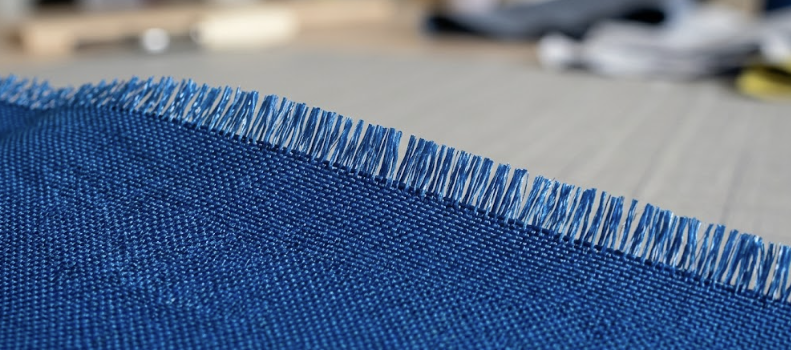
This structural disruption leads to the phenomenon known as fraying, where loose thread ends unravel from the fabric edge immediately after the cut. Fraying is far more than a cosmetic defect; it compromises the structural integrity of the seam, leads to dimensional inaccuracies that affect the final garment’s fit, and can cause catastrophic failure in high-stress industrial applications. In sectors like aerospace or automotive safety, a single frayed edge can lead to a rejected batch, making the stability of the cutting process a critical factor in quality control and waste reduction.
II. Analyzing the Root Causes of Edge Instability in Synthetics
To effectively solve the issue of edge fraying, it is essential to analyze the underlying mechanical triggers that occur during high-speed production. Fraying typically occurs due to three primary factors that digital systems are designed to mitigate:
l Lateral Displacement and Stretching: If a blade is not sufficiently sharp or moves at an inconsistent velocity, it pushes the fabric horizontally before the tip can penetrate the surface. This microscopic stretching deforms the weave, causing yarns to slip out of their locked positions and remain partially uncut, leading to the “hairy” edges common in low-quality production.
l Friction-Induced Heat and Melting: Localized melting that creates beads of hard plastic along the cut line. In high-end apparel and luxury upholstery, this “melt-frizz” is unacceptable as it significantly affects the hand-feel, flexibility, and breathability of the textile, potentially irritating the end-user’s skin.
l Vibration Inconsistency and Blade Deflection: High-speed cutting requires absolute stability. Any microscopic oscillation or vibration in the cutting head during the process leads to jagged, micro-stepped edges. These irregularities serve as starting points for unravelling when the fabric is subsequently handled or sewn, making the precision of the motion control system paramount.
III. The Architecture of Digital Blade Technology and Innovation
Digital blade technology replaces the variability of manual guesswork with high-frequency oscillation and algorithmic control. At its core, this technology utilizes a CNC (Computer Numerical Control) interface to manage the movement of various specialized tools with sub-millimeter accuracy. Hangzhou IECHO Science & Technology Co., Ltd. (Stock code: 688092) has pioneered these solutions as a global intelligent cutting supplier for the non-metal industry, maintaining a manufacturing base that exceeds 60,000 square meters to support global supply chains.
The “Digital” aspect refers to the system’s ability to adjust mechanical parameters—such as down-pressure, oscillation frequency, and blade angle—in real-time based on the specific density and weave of the material being processed. With R&D personnel accounting for more than 30% of the workforce, IECHO has refined these mechanics to ensure that digital cutting remains a “cold” process. By avoiding the application of heat, the technology preserves the original physical properties and chemical stability of the synthetic fibers, ensuring that the finished product meets ISO and CE certification requirements for material performance.
IV. Overcoming Fraying Through Intelligent System Design
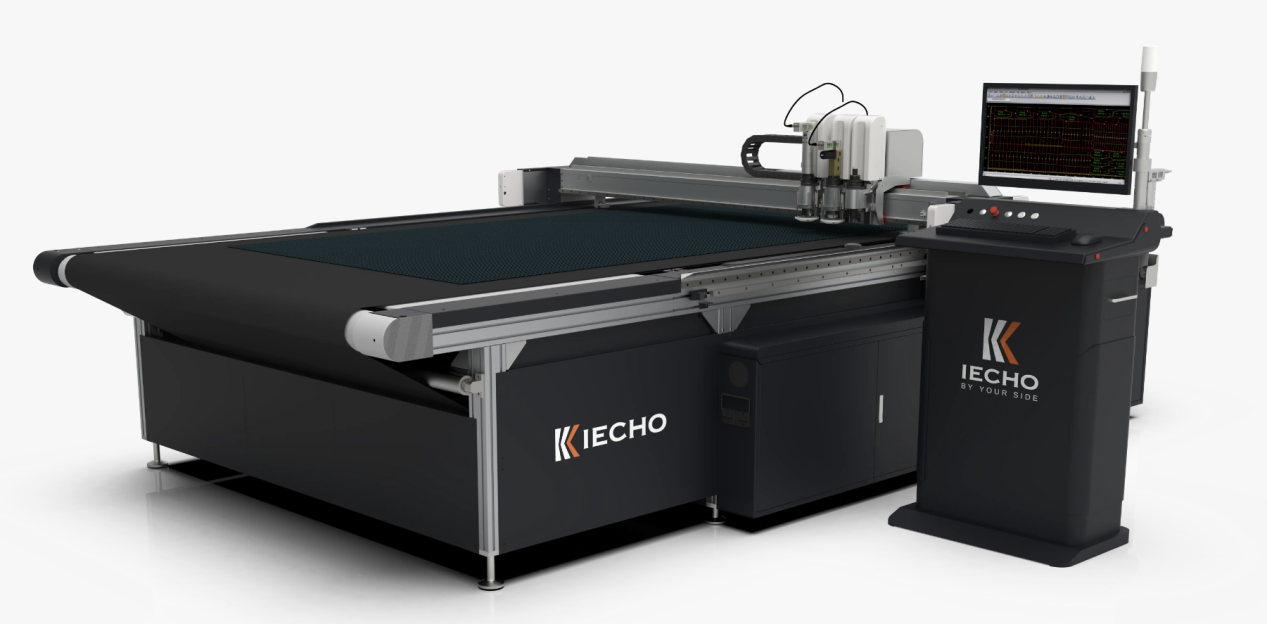
The prevention of fraying is achieved through a meticulous combination of hardware precision and software intelligence. The TK4S Large Format Cutting System exemplifies this technical synergy, offering a versatile platform for large-scale industrial output. By utilizing a high-performance motion control system, the equipment achieves a seamless cutting path that eliminates the “stop-start” jerky motions that typically cause snags or uneven tension in synthetic fabric.
The TK4S is designed for high-intensity environments, featuring a multi-head cutting system that can be equipped with various tools simultaneously, allowing for the processing of single layer and few layers materials without losing alignment. A critical technical feature in the fight against fraying is the vacuum extraction system. By securing the textile firmly against the cutting bed with adjustable zones of high-pressure suction, the material is rendered immobile. This prevents the fabric from shifting or bunching during the blade’s entry and exit. Furthermore, the integration of intelligent cutting software allows for the automatic initialization of tool depth via infrared sensors. This ensures the blade penetrates the material at the mathematically optimal depth to achieve a clean shear against the cutting mat, effectively “pinning” the filaments at the moment of the cut to prevent any lateral expansion or unravelling.
V. Global Impact and the Future of Intelligent Cutting
The shift toward digital blade technology is not merely about mechanical precision; it represents the fundamental transformation of the non-metal industry into a data-driven, “intelligent” sector. Headquartered in Hangzhou with specialized branches in Guangzhou, Zhengzhou, and Hong Kong, IECHO has established a complete service network that bridges the gap between Chinese manufacturing excellence and global industrial requirements. This footprint ensures that enterprises in over ten industries, including textile and garment, automotive interior, office automation, and luggage, can modernize their facilities with confidence.
By significantly reducing material waste through optimized nesting algorithms and eliminating the need for secondary manual edge-finishing processes, companies can achieve a more sustainable and profitable production cycle. The business philosophy of adhering to “high-quality service as its purpose and customer demand as the guide” ensures that as synthetic materials become more complex and environmentally sensitive, the technology used to shape them evolves in tandem. This commitment to innovation ensures that global industry users can continue to redefine the standards of quality in the era of intelligent manufacturing.
For more information on intelligent cutting solutions and technical services, visit the official website: https://www.iechocutter.com/