
In the rapidly evolving landscape of global manufacturing, the transition from manual craftsmanship to automated precision has redefined productivity across multiple sectors. The garment and textile industry, where the demand for speed, accuracy, and material efficiency has never been higher. Today, Hangzhou IECHO Science & Technology Co., Ltd. (IECHO) stands at the forefront of this shift, recognized as a Global Leading Digital Garment Multi-layer Cutting Machine Brand. By integrating advanced motion control technology with industrial software, IECHO has successfully bridged the gap between traditional design and modern high-speed production, offering intelligent cutting solutions that empower enterprises to navigate the complexities of Industry 4.0.
The Dawn of Precision: The Era of Pattern Plotting
The journey of textile manufacturing began long before the digital age, characterized by labor-intensive processes that relied heavily on human skill. In the early stages of industrialization, “Pattern Plotting” represented the first major technological leap. Designers would manually draft patterns on paper, which were then traced onto fabric layers. The introduction of pen plotters in the late 20th century automated the drawing phase, allowing for more consistent templates.
However, even with automated plotting, the actual cutting remained a bottleneck. Large shears or handheld vertical knives were used to cut through stacks of fabric. This method was fraught with challenges: human fatigue led to inconsistencies, the physical strain on workers was significant, and the “buffer” required between patterns to accommodate the knife’s width resulted in substantial material waste. As global consumer demand for “fast fashion” and customized upholstery grew, the limitations of manual cutting—high labor costs, slow turnaround times, and low precision—became unsustainable.
The Digital Pivot: Principles of High-Speed Multi-Layer Cutting
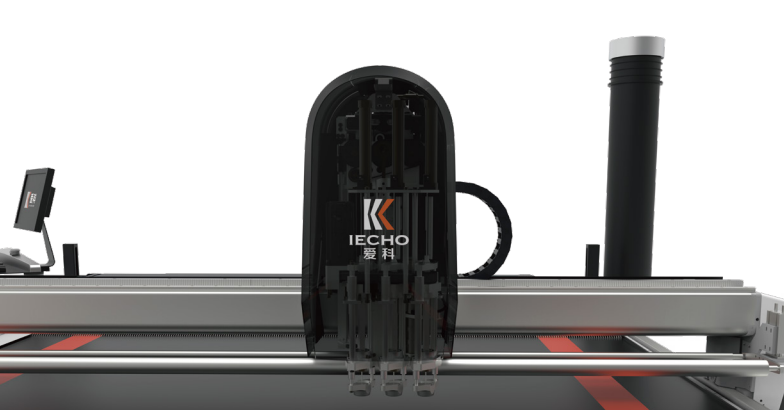
The evolution from plotting to “High-Speed Digital Cutting” marks a paradigm shift where the “blade” is no longer guided by a hand, but by sophisticated motion-control algorithms. At the heart of this transition lies a sophisticated interplay between physics and digital precision. Unlike traditional methods, digital cutting systems like those developed by IECHO utilize a “Direct-from-CAD” workflow, eliminating the need for physical paper patterns and the errors associated with manual tracing.
The core principle of this technology involves the seamless synchronization between a high-power vacuum-sealed cutting bed and a high-frequency vibrating tool head. By utilizing advanced vacuum suction technology, the system extracts air from the cutting area, creating an immense downward pressure that compresses multiple layers of flexible fabric into a single, dense, and stable block. This stabilization is critical; it prevents the “fabric creep” or shifting that typically occurs when a physical blade meets resistance. As a result, the machine ensures that the bottom-most layer is cut with the exact same geometric fidelity as the top layer.
This technological leap enables the implementation of “zero-distance” cutting. In manual environments, a “buffer” or safety gap is required between patterns to accommodate the physical width of the knife and the displacement of the fabric. However, with the rigid stability provided by the vacuum and the precision of the high-frequency reciprocating knife, patterns can be nested tightly against one another—touching edge-to-edge. This level of optimization allows for a dramatic increase in material yield, a feat that remains physically impossible with manual tools.
Comparative Analysis: Traditional vs. Digital Cutting
To understand the impact of this evolution, one must examine the tangible costs associated with production. The transition to high-speed digital systems addresses four critical pillars:
A. Time Efficiency and Throughput
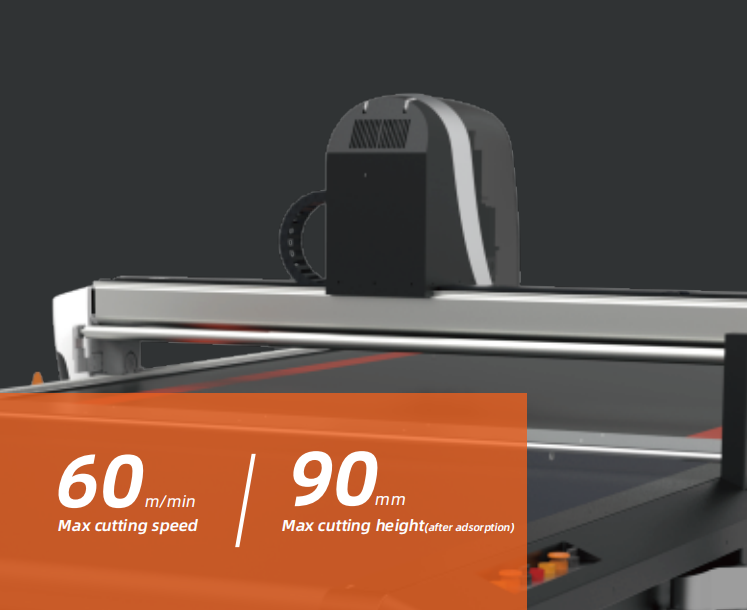
In a traditional setup, preparing, plotting, and manually cutting a multi-layer marker could take several hours. A high-speed digital multi-layer cutter, such as the IECHO GLSE series, can process the same volume in a fraction of the time. With a Maximum Cutting Speed of 60m/min, these machines turn what was once a day-long task into a matter of minutes, significantly shortening the lead time for large-scale orders. The GLSE series features a Maximum Vibration Frequency of 4500 rpm, ensuring that every stroke is calculated for maximum velocity without compromising the integrity of the fabric.
B. Labor Optimization
Manual cutting rooms require a large team of skilled cutters whose performance may fluctuate. In contrast, digital cutting requires fewer operators. IECHO has focused on making the user interface intuitive, allowing enterprises to shift their human capital from repetitive physical labor to higher-value roles like digital pattern optimization and quality control. These machines, weighing between 2.5 to 2.8 tons, are built on a stable chassis to handle high-speed oscillations. The Equipment Operating Position is ergonomically placed on the right side, allowing a single operator to manage a machine with an Installation Total Power of 25kW to 36kW and an Average Energy Consumption of 18kW or less.
C. Material Utilization and Cost Reduction
Fabric typically accounts for 60% to 70% of the total cost of a garment. Digital systems use advanced nesting software to calculate the most efficient layout. By reducing the gap between pieces to nearly zero through Intelligent Notch Optimization, manufacturers can save fabric compared to manual methods. Over a year of high-volume production, these savings can equal the cost of the machine itself. The GLSE series supports a Max Cutting Height of 90mm after adsorption, allowing manufacturers to cut more layers simultaneously. With Effective Cutting Widths of 2.0m (GLSE-2520) or 2.2m (GLSE-2522), businesses can match the machine to their specific fabric rolls, minimizing lateral waste.
D. Precision and Quality Consistency
Human error is an inherent risk in pattern plotting and manual cutting. Digital systems maintain a precision tolerance of within 0.1mm through the New Vacuum Chamber Design. This ensures that every piece in a batch of 50,000 is identical, which is crucial for complex applications like automotive interiors or high-end technical textiles where fit is non-negotiable. This consistency is further guaranteed by the Knife Intelligent Automatic Compensation, which ensures the cutting path remains accurate despite blade wear.
IECHO: Redefining the Cutting Edge through Innovation
The journey from the humble plotter to the intelligent multi-layer cutting system reflects the broader trend of “Smart Manufacturing.” Today, IECHO’s products are utilized in over 100 countries, helping industries from automotive interiors to printing and packaging transition into the digital age. By redefining what is possible in terms of speed and precision, IECHO is not just providing a tool; it is providing a cornerstone for the survival and development of modern enterprises.
As industries continue to face pressure for customization and efficiency, the role of intelligent cutting will only grow. For those looking to upgrade their production capabilities, the evolution is clear: the precision of digital technology is the only path toward creating excellent value in a competitive global market.
For more information on intelligent cutting solutions, visit the official IECHO website: https://www.iechocutter.com/