
The domestic label printing market is clearly segmented into two primary categories of business operators:
Small-to-Medium Print Shops & Startup Converters: These businesses primarily handle fragmented, short-run orders. Individual roll lengths are short, order SKUs are diverse, and shop floor space is tightly constrained. They require compact equipment with fast job changeovers and the versatility to support sheeted output.
Large-Scale Digital Label Printing Plants: These facilities focus on continuous, high-volume orders running tens of thousands of meters. They specialize in high-end specialty labels requiring UV foiling and UV varnishing, operate ample factory space, and target uninterrupted 24/7 mass production.
Because a single machine cannot satisfy both operational profiles, IECHO introduced a dual-model strategy: the compact LCT2 and the extended high-volume LCT350. Both share identical core hardware standards for the laser engine, precision, and speed, but feature differentiated designs in structure, optional modules, and target scenarios. This allows businesses to select the exact fit for their order structure, avoiding either over-investing in unused capacity or bottlenecking production.
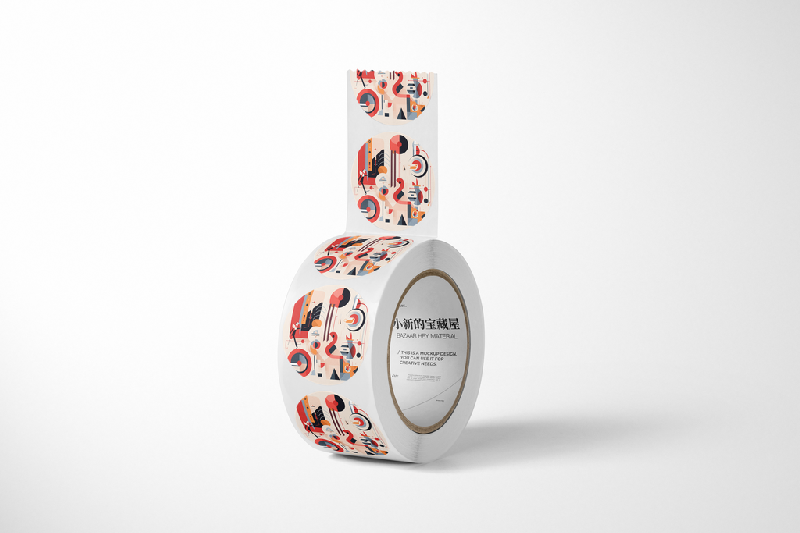
Identical Core Hardware Ensures Uncompromised Baseline Processing Power:
Laser Source: Equipped with a 300W metal RF laser. The integrated Laser Box optical path extends optical component lifespan by 50% with an IP44 dustproof rating.
Speed & Performance: On-the-fly laser cutting reaches speeds up to 5 m/s, with a maximum discharge speed of 46 m/min.
Precision Control: A triple-precision system, ultrasonic web guiding, magnetic powder constant tension control, and photoelectric positioning, maintains stable die-cutting precision within ±0.1 mm. Smart Ecosystem: Standard equipment includes dynamic QR-code scanning for instant graphics changeover, smart monitoring, remote diagnostics, convective smoke extraction, and smoke alarm safety systems.
Format & Media Handling: Fully supports mainstream vector formats including AI, PDF, DXF, and PLT. Handles maximum cutting widths up to 350 mm, material widths up to 390 mm, and roll diameters up to 700 mm across all pressure-sensitive adhesive substrates.
Shared hardware lineage ensures both models offer identical processing quality, speed, and stability. Differences lie across three dimensions: chassis structure, rewinding configurations, and optional embellishment modules.
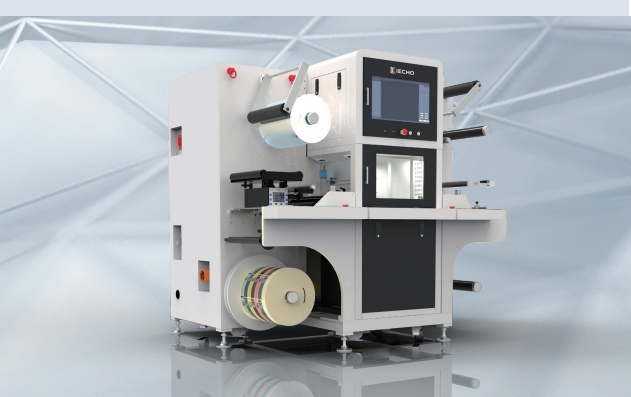
First Key Difference: Machine Dimensions & Spatial Fit
LCT2: Measures 2032×1580×2006 mm. Features a compact vertical footprint, half the length of the LCT350. It fits easily in street-front print shops or office spaces with tight spatial constraints.
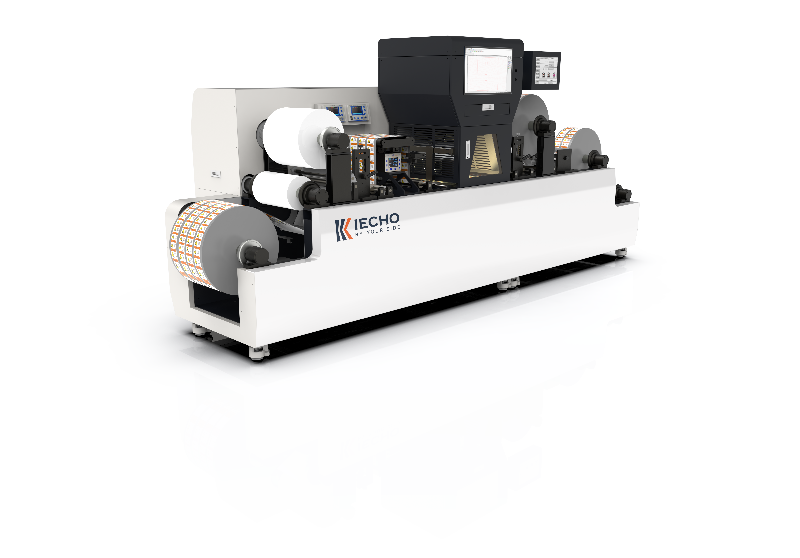
LCT350: Measures 3950×1350×2100 mm. Features an extended horizontal chassis requiring a long inline workshop footprint, designed specifically for standardized factory floors.
Second Key Difference: Standard Features & Quality Control
LCT2: Tailored specifically for print shop workflows. Exclusively includes a real-time missing label detection module in its standard configuration to automatically flag misprints and damaged labels, reducing manual inspection overhead. Standard capabilities cover die-cutting, laminating, slitting, and waste stripping. An optional cross-cutting sheeting unit can be added on demand to enable dual-mode output (roll-to-roll and roll-to-sheet) for retail orders.
LCT350: Built for continuous mass production of long rolls. Built in dual independent rewind shafts allow simultaneous rewinding of two slit rolls without stopping for frequent roll changes. It omits the missing-label inspection and built-in sheeting unit, focusing purely on continuous roll-to-roll output for large factory runs.
Third Key Difference: Optional Embellishment Modules & Business Scope
LCT2: Optional add-ons are streamlined to cold laminating, fume extraction, and a sheeting unit, covering standard self-adhesive label processing to satisfy baseline print shop orders.
LCT350: Beyond standard options, it supports inline UV varnishing and UV hot foiling / cold foil modules. Foiling, varnishing, and die-cutting are completed seamlessly in a single pass for high-end cosmetics, spirits, and luxury labels.
Clear Application Boundaries:
LCT2: Tailored for print shops and small printers handling fragmented orders, operating in limited space, producing standard pressure-sensitive labels, and requiring sheeted output.
LCT350: Built for professional digital label converters handling continuous long runs, specializing in high-end UV specialty labels, utilizing ample factory space, and running 24/7 continuous production.
Together, these two complementary models cover the full spectrum of label production, from short-run prototyping to multi-thousand-meter mass production.
LCT2: 2032×1580×2006 mm | Compact footprint for short runs
LCT350: 3950×1350×2100 mm | Extended production line with UV foiling
Hardware Parity: Both models feature the same 300W metal RF laser engine, ±0.1 mm cutting accuracy, and 5 m/s fly-cutting speed.
Key Differentiator: LCT2 adds real-time missing-label detection and optional sheeting for retail orders; LCT350 adds dual rewind spindles and inline UV varnishing/foiling for long factory runs.