
The global manufacturing landscape is undergoing a fundamental upgrade of production standards. Clients across industries are raising stricter requirements for consistent high precision, flawless surface finish, uninterrupted mass production and flexible order fulfillment. To meet these elevated market demands, manufacturing facilities must adopt advanced automation solutions as a core strategic upgrade, even though investment in intelligent machinery brings new capital considerations. This shift is especially prominent in the production of high-end decorative components, where stable, uniform precision has long relied on seasoned operators with years of hands-on experience.
Today’s manufacturers face their core challenge: continuously meeting stringent, ever-rising production benchmarks. A secondary accompanying pressure lies in the insufficient supply of veteran skilled operators. Enterprises that stick to traditional manual workflows face lengthy, cost-heavy training cycles for new hires, which hinders stable continuous production and limits output scalability. Against this backdrop, intelligent automation emerges as the fundamental solution to satisfy market quality and efficiency standards, while also easing the comprehensive cost burdens brought by labor-intensive manual production.

The Limitation of Manual Workflows When Meeting Premium Production Standards
For manufacturers producing high-precision decorative parts, zero tolerance for dimensional and surface defects has become a baseline market requirement. For decades, consistent premium finishing could only be achieved by senior workers proficient in diverse material characteristics and processing techniques. However, limited availability of experienced operators amplifies the instability of manual production, making it harder for factories to sustain uniform quality and uninterrupted output to match growing market orders.
Training novice staff to reach qualified operation standards takes a long cycle that conflicts with fast-paced modern production schedules. Therefore, the value of automation extends far beyond merely accelerating output speed. More crucially, it decouples stable high-quality production from reliance on experienced labor, enabling factories to fully comply with strict market standards at scale.
Streamlining Operations: Multiplied Output with Minimal Manpower Input
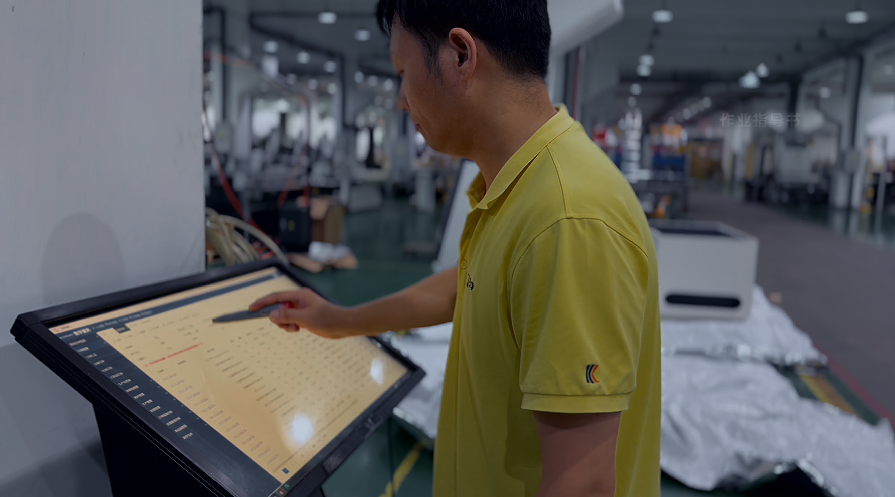
To keep pace with elevated market production criteria, manufacturers widely deploy IECHO intelligent cutting systems within production lines. By shifting from labor-heavy manual workflows to fully automated digital processing, factories greatly lift overall output capacity while optimizing manpower allocation.
A leading decorative component manufacturer shared tangible operational improvements after rolling out IECHO digital cutting equipment:
“Our core motivation for automation upgrade is to keep up with the market’s stricter standards for precision, stable quality and continuous production. Under our original manual process, meeting finish accuracy standards required a dedicated team of four to five skilled workers solely for cutting procedures. After adopting IECHO intelligent systems, our overall throughput has increased substantially. Now a single operator can oversee the complete cutting workflow, delivering several times the original production volume. We are able to redeploy our skilled workforce to higher-value links across our factory.”
Building Long-Term, Sustainable Production Competitiveness
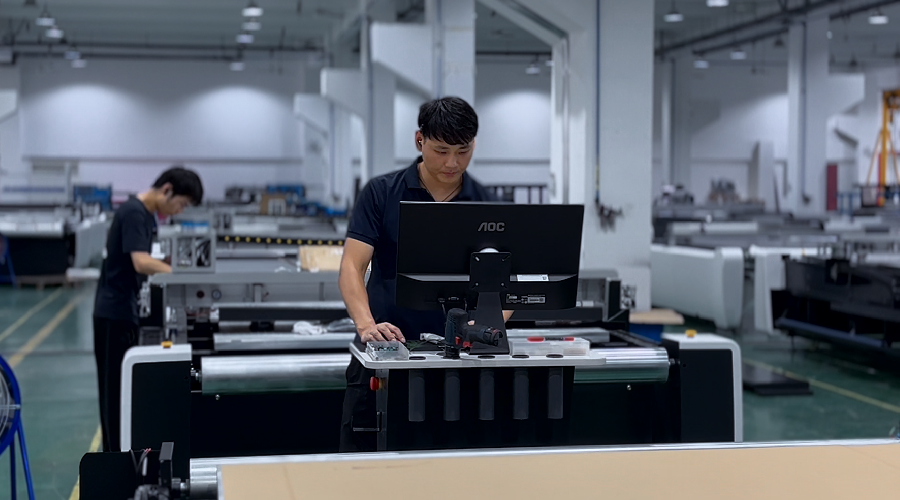
Enabling one operator to manage full high-precision cutting procedures delivers transformative gains in overall production capacity. IECHO digital intelligent processing replaces labor-reliant traditional workflows, multiplying factory output while cutting comprehensive operational costs. Regardless of fluctuations in the skilled labor market, manufacturers can maintain uniform, top-tier product quality and stable continuous production to satisfy long-term market demands.
As global manufacturing standards keep advancing, forward-thinking enterprises regard intelligent automation not as a tool merely to cut labor numbers, but as an indispensable core pillar to sustain stable high-quality output, scale up production efficiency and secure lasting industrial competitiveness.