In high-volume material manufacturing, evaluating equipment procurement solely on initial purchase price often introduces hidden, compounding operational deficits. For modern manufacturing facilities, calculating the true life cycle cost of a digital cutting system requires looking beyond the initial invoice to assess long-term structural stability, calibration downtime, and machinery depreciation rates over a ten-year horizon.

The Hidden Costs of Budget Cutting Systems
When manufacturing lines attempt to scale production using low-cost, budget-tier cutting tables, technical limitations quickly manifest under high-intensity workloads. Standard industrial cutting presents specific structural challenges when pushed to maximum speed:
High-Speed Instability: Budget systems frequently suffer from structural resonance and frame vibration when running at high velocity. This directly causes cutting deviation, jagged edges, and material pulling or fraying.
Structural Deformity: Continuous, multi-day operations put immense stress on lightweight chassis designs. Over time, the machine frame deforms, permanently compromising the system’s geometric precision.
Escalating Maintenance Overhead: To compensate for mechanical misalignment, operators must spend hours changing blades, manually adjusting parameters, and constantly re-calibrating. This technical downtime, paired with rapid machine depreciation, frequently exceeds the cost of standard floor labor.
To maintain precision on budget hardware, factories are forced to lower operational speeds. However, slowing down production creates an immediate bottleneck that alienates clients demanding rapid turnaround times, leaving factory owners stuck between compromised quality and missed deadlines.
Unibody Engineering: Built for a Ten-Year Lifecycle
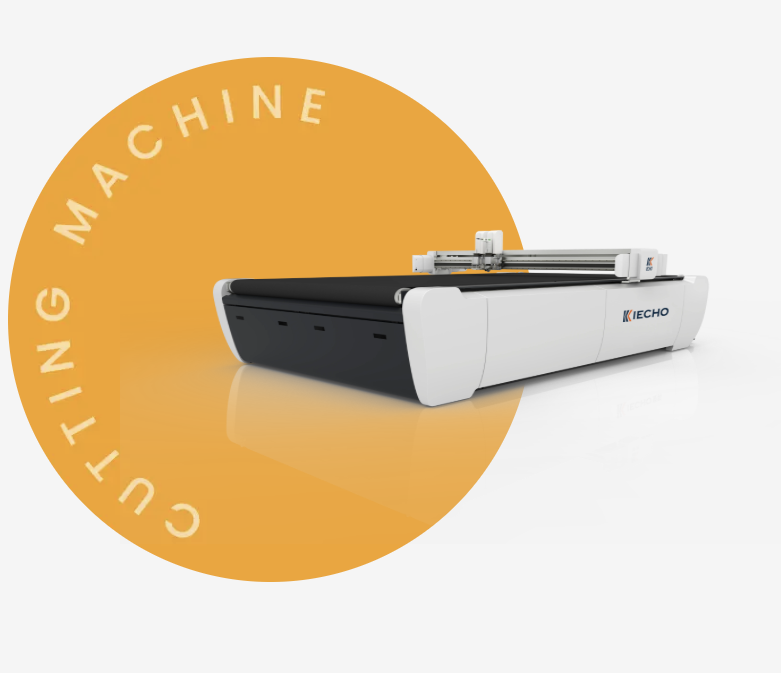
To break this cycle of constant replacement and recurring capital expenditure, IECHO engineered the IECHO BK4 High-Speed Cutting System around a heavy-duty, reinforced uni-body frame. Designed to withstand continuous 24/7 full-capacity workloads, this thickened structural framework isolates mechanical vibrations and completely prevents chassis warping over extended life cycles.
By eliminating high-speed frame shaking, the BK4 keeps cutting precision consistently stable on every run without requiring frequent manual intervention or daily re-calibration cycles. While many budget machines face severe structural fatigue and require replacement within roughly three years under heavy continuous operation, the BK4’s rigid architecture is built to sustain near-original precision consistently across a full decade.
Optimizing Return on Investment (ROI)
For forward-thinking plant managers, investing in a robust, high-stability platform represents a direct strategy to protect margins and eliminate unexpected capital outlays. Transitioning from a shorter three-year equipment replacement cycle to a reliable ten-year operational life cycle yields immediate competitive benefits:
Continuous Maximum Throughput: Maintaining reliable precision at top speeds allows factories to comfortably meet high-volume, quick-turnaround contracts.
Minimized Technical Downtime: Eliminating frequent calibration and part adjustment phases maximizes active machine uptime.
Lower Total Cost of Ownership: Spreading equipment investment over a ten-year window slashes long-term depreciation expenses and stabilizes factory overhead.
Investing in structural reliability ensures your production line remains fast, accurate, and completely dependable, turning equipment setup from a recurring headache into a lasting asset.
About IECHO
Headquartered in Hangzhou, IECHO (Stock Code: 688092) is a global leader in high-tech material processing. With a significant portion of our team dedicated to R&D, we are constantly pushing the boundaries of what CNC technology can achieve. Our systems are built to meet the rigorous safety and performance standards of the world’s most demanding supply chains. When you choose IECHO, you are investing in decades of engineering expertise and a rigorous burn-in testing protocol that guarantees operational reliability worldwide.