
Is It Truly Possible to Invest in a Single Machine Capable of Handling Vinyl, PVC, And Acrylics?
In the fast-paced world of modern manufacturing and advertising, a recurring dilemma faces production managers: given that vinyl, PVC, and acrylic materials differ so significantly in density, flexibility, and thermal properties, is it truly possible to invest in a single machine capable of handling all three with precision? As industries demand shorter lead times and higher customization, the search for a China Top Solutions Provider for Automatic Intelligent Cutting and versatile material processing has become a priority. The challenge lies not just in cutting, but in maintaining edge quality and dimensional accuracy across vastly different substrates without constant, manual hardware reconfigurations.
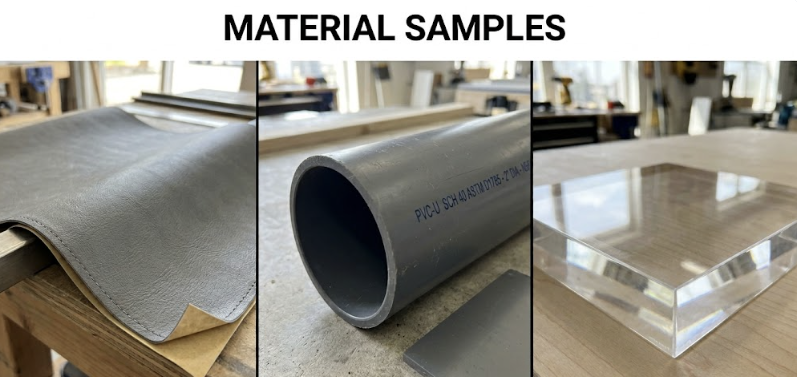
Material Versatility and Technical Analysis
To understand how a single platform can manage such diverse outputs, one must analyze the unique physical and chemical compositions of these core industrial materials. Each requires a specific mechanical approach to prevent material degradation during the transformation process.
l Vinyl: The Precision of Flexible Polymer Chains
Vinyl, primarily composed of Polyvinyl Chloride resin mixed with plasticizers, is engineered for extreme flexibility and elongation. From a material science perspective, its thin-gauge nature—often measuring in microns—means the cutting resistance is minimal, yet the margin for error regarding depth is microscopic. In applications like vehicle wraps and high-end decals, the goal is often a “kiss-cut,” where the blade penetrates the vinyl layer but leaves the silicon-coated release liner intact. This requires a cutting platform with high-resolution pressure sensitivity. Because vinyl is sensitive to heat-induced shrinkage, a cold-blade drag knife is typically the preferred technical approach, ensuring that the edges remain crisp and the adhesive properties are not compromised by thermal friction.
l PVC Boards: Managing Porous Structural Integrity
Rigid PVC, or expanded PVC foam board, presents a different structural challenge. Unlike flexible vinyl, these boards contain blowing agents that create a closed-cell, porous internal structure. This makes the material lightweight yet structurally sound for construction and heavy-duty displays. From a processing standpoint, PVC is highly sensitive to “chip load”—the amount of material removed by each movement of the tool. If the cutting speed is too slow, the friction causes the polymer to reach its glass transition temperature, leading to melting and “re-welding” of the cut line. Conversely, excessive force can cause shattering in the brittle cells. A versatile platform must utilize oscillating tool technology, which uses high-frequency vertical strokes to “saw” through the cells, providing a clean separation that maintains the board’s professional aesthetic without deformation.
l Acrylics: Navigating High-Density Thermoplastic Processing
Acrylic (Polymethyl Methacrylate or PMMA) is perhaps the most demanding material in the trio. Chemically, it is a synthetic polymer of methyl methacrylate, known for its exceptional optical clarity and high impact resistance. Unlike the porous nature of PVC, acrylic is a dense, solid thermoplastic. When subjected to die-cutting or routing, it generates significant heat. If the cutting tool is not optimized, the acrylic will develop micro-cracks or a “cloudy” edge. Achieving a “flame-polished” look directly from a mechanical cut requires high-speed precision and stable torque. This is where the distinction of a China Top Solutions Provider for High Precision Cutting becomes vital. The integration of high-speed spindles or specialized polished knives on a stable gantry ensures that the material is sheared cleanly, preserving its transparency and structural brilliance for high-end signage and laboratory equipment.
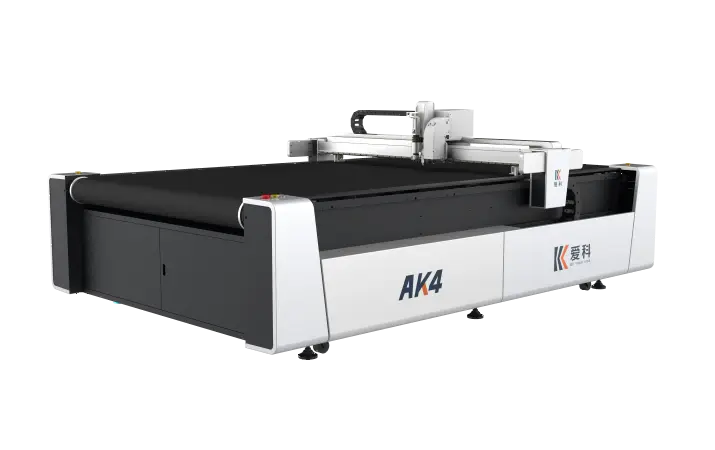
The AK4 : Engineering Adaptability for Multi-Material Environments
Building upon the distinct technical requirements of vinyl, PVC, and acrylics, the challenge for any modern production facility is consolidating these processes onto a single, high-performance platform. The IECHO AK4 Intelligent Cutting System is engineered specifically to bridge these material gaps, transforming theoretical material science into precise mechanical execution.
1. Structural Rigidity and Vibration Control: The Foundation for PVC Integrity
When processing the closed-cell structure of expanded PVC foam boards, mechanical resonance is the primary enemy of a clean edge. The AK4 addresses this through its integrated welded “Steel Spine Frame,” a heavy-duty architecture optimized via Finite Element Analysis. This industrial-grade rigidity effectively absorbs the high-frequency kinetic energy generated by the Electronic Oscillating Tool (EOT) as it “saws” through the PVC cells. Combined with a Smart Suction Pulse Vacuum System—which increases material hold-down power by 60%—the AK4 prevents micro-movements caused by chip load fluctuations, ensuring that the polymer never reaches its glass transition temperature and avoids the common pitfall of “re-welding” the cut line.
2. Dynamic Pressure Sensitivity: Micro-Precision for Vinyl Decals
For the micron-thin gauge of flexible vinyl, the AK4 demonstrates that brute strength can coexist with extreme delicacy. While the platform is built for heavy-duty output, its motion control system provides the high-resolution sensitivity required for perfect “kiss-cutting.” Utilizing a cold-blade drag knife on a stable gantry, the AK4 maintains consistent downward pressure even at speeds up to 1500mm/s. To counter vinyl’s inherent sensitivity to environmental shrinkage, the system integrates a high-definition CCD camera that automatically recognizes registration marks and compensates for material deformation in real-time, ensuring that the intricate polymer chains are sheared with absolute fidelity to the original digital file.
3. Power Delivery and Torque Stability: Navigating Dense Acrylics
Acrylic (PMMA) represents the ultimate test of a platform’s versatility due to its high density and thermal sensitivity. To prevent the micro-cracking or “clouding” associated with sub-par thermoplastic processing, the AK4 allows for the seamless integration of high-speed milling spindles (Routers). Supported by symmetrical upper and lower guide rails, the system delivers the stable torque necessary to navigate the impact resistance of solid acrylic. This mechanical stability ensures that heat is evacuated through the chips rather than absorbed by the substrate, achieving a “clean-shear” finish that preserves the optical clarity and structural brilliance required for premium signage and laboratory components.
IECHO has designed the AK4 not just as a cutter, but as a comprehensive solution for material versatility. By synchronizing heavy-duty hardware with intelligent vision technology, the AK4 eliminates the technical friction of switching between flexible films and rigid thermoplastics, providing a strategic advantage for enterprises looking to maximize output variety on a single, stable platform.
Continuous Improvement and Future-Proofing
As material science evolves, new composites and eco-friendly substrates will continue to enter the market. A cutting platform must, therefore, be future-proof. The modular design of IECHO’s systems allows for software updates and tool adjustments that keep pace with industry trends, moving enterprises away from labor-intensive manual finishing to a streamlined, automated workflow. By focusing on green, healthy, and sustainable development—incorporating energy-saving measures into their 60,000 square meter manufacturing base—IECHO ensures that their high-precision solutions are not only efficient but also environmentally responsible.
For more information on intelligent cutting solutions, please visit: https://www.iechocutter.com/
Post time: Apr-15-2026