
Traditional label post-press processing workflows are complex and redundant. Die-cutting, lamination, slitting, waste stripping, and sheet cutting belong to separate, independent processes. Enterprises must purchase multiple specialized machines, taking up significant factory floor space, while each process requires dedicated operators, keeping labor costs high. Moving materials repeatedly between multiple devices with secondary loading and unloading not only extends overall turnaround times, but also easily causes registration errors, surface scratches, and other defects, making it difficult to guarantee yield rates for volume orders. As automation and integration trends become prominent in the label industry, one-stop integrated post-press equipment has become the preferred upgrade for top printing plants. IECHO’s brand-new 2025 iteration, the LCT2 compact laser die-cutting machine, integrates five core processes, die-cutting, cold lamination, slitting, waste stripping, and sheet cutting, into a single unit. It truly realizes a “raw material roll in, finished labels out” workflow, bridging the entire label post-press processing chain.
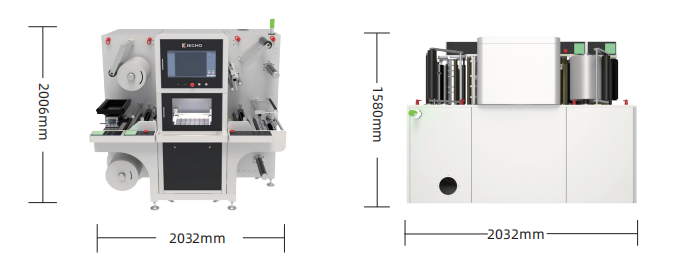
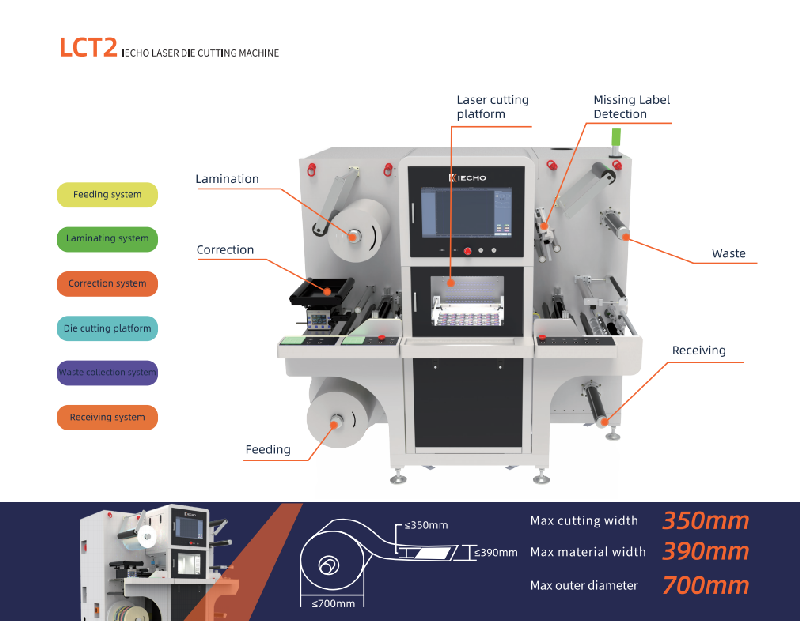
As the newly upgraded flagship model of the LCT series, the LCT2 is specially built for small-to-medium label shops and medium-to-large digital printing plants. The overall machine dimensions are 2032mm × 1580mm × 2006mm. Featuring a short vertical, compact, all-steel welded body, its length is only half that of the first-generation LCT350 model, requiring no large-area workshop and allowing direct floor installation in storefront locations or standard factory workstations. The entire machine frame is precision-machined as a single piece by a large five-axis gantry milling machine and undergoes multiple anti-aging treatments. The body experiences zero vibration during high-speed continuous operation, keeping processing accuracy stable over long-term use and perfectly meeting the shop’s demand for 24/7 uninterrupted production. The machine is divided into seven independent, collaborative modules: feeding, lamination, web guiding, laser die-cutting, waste rewinding, slitting, and finished material rewinding. All processes work in synchronized linkage, completing protective lamination, precision laser die-cutting, automatic waste stripping, and finished label slitting in a single pass. With the optional sheet cutting module, it can directly cut individual finished sheets, catering to both roll rewinding and sheet delivery, the two mainstream demands in the market.
Quality control upgrades are a core iterative highlight of the LCT2. The model comes standard with an exclusive missing-label detection module equipped with high-definition photoelectric recognition components. It scans the web labels in real time during processing to automatically identify unprinted areas, missing labels, and defective print designs, immediately stopping the machine and alerting operators when defects occur. This eliminates the need for manual sheet-by-sheet re-inspection, reducing the outflow of defective products at the source, significantly lowering customer return and rework risks, and improving store reputation. The laser system has been fully upgraded with a 300W metal RF laser paired with a Laser Box integrated optical path system, extending the service life of optical components by 50% and achieving an IP44 protection rating. This effectively isolates workshop dust and moisture, reducing failure rates of core laser components. The high-precision aluminum alloy laser working platform guarantees uniform and consistent die-cutting depth, making kiss-cut depth controllable for both thin PET and thick coated paper, avoiding common processing issues such as cutting through the backing paper or failing to cut through the face material.
In terms of intelligence, the entire LCT2 series comes standard with four key digital features: dynamic QR code job switching, smart monitoring, mobile connectivity, and remote diagnostics. Operators can switch order graphics with a single click by scanning a code, and stores label processing parameters for different materials and sizes for quick recall. Managers can view machine runtime, processing volume, and fault warning information in real time via mobile devices. When equipment anomalies occur, after-sales engineers can remotely connect to the system to troubleshoot optical path, web guide, or tension faults without waiting for on-site service, significantly shortening downtime. The convection fume removal system adopts a bottom-blowing and side-exhaust layout at the source, featuring mirror-polished smoke channels for easy wiping and cleaning. Combined with intelligent smoke alarms, it promptly exhausts laser processing fumes and dust to protect the laser lens while maintaining a clean workshop environment.
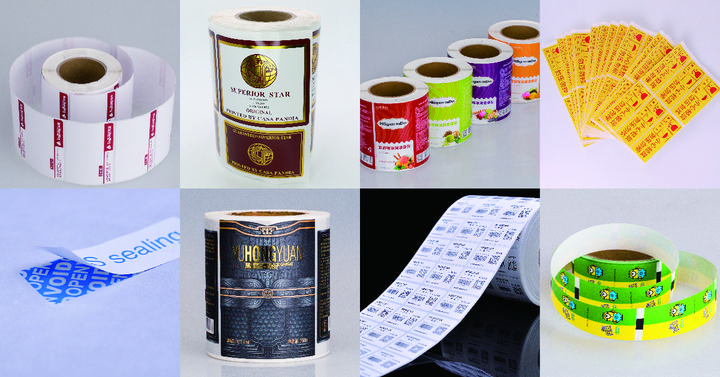
Functional configurations flexibly adapt to different operating scales. Slitting and dynamic QR code job switching come standard from the factory, while cold lamination, smoke purification systems, and sheet cutting units can be selected on demand. Startup shops can purchase the basic configuration to control initial investment costs and add expansion modules later as order volumes expand. The machine accommodates the full range of pressure-sensitive material categories, including coated paper, synthetic paper, brushed metallic foils, PET, PP, and BOPP, covering label processing needs across food, daily chemicals, beverages, electronics, and cosmetics industries.
Today, label industry clients continue to demand faster turnarounds and higher finished product quality, making multi-device processing models increasingly outdated. With its four major advantages, high integration, compact footprint, intelligent quality control, and flexible options, the IECHO LCT2 integrated laser die-cutting machine solves traditional post-press pain points such as cumbersome procedures, high labor losses, large space usage, and low yield rates in one step, becoming the ideal all-in-one choice for post-press digital upgrades in digital label factories.