
As brand packaging aesthetics upgrade, self-adhesive label materials are diversifying. Beyond traditional coated paper and synthetic paper, the application of specialty materials, such as PET transparent film, PP film, BOPP composite film, brushed gold/silver paper, matte silver laser film, and thick kraft paper, continue to rise. The physical properties of these materials vary vastly: films are light, thin, and easily stretched; metallic papers have high hardness and strong reflectivity; thick papers require higher laser energy. Traditional single-purpose die-cutting equipment can only adapt to 2–3 conventional materials. Changing materials requires replacing physical dies and repeatedly tuning equipment, which is time-consuming. Small and medium-sized enterprises (SMEs) often need to purchase multiple dedicated machines to cover all order materials, leading to high equipment investments and large factory footprints.
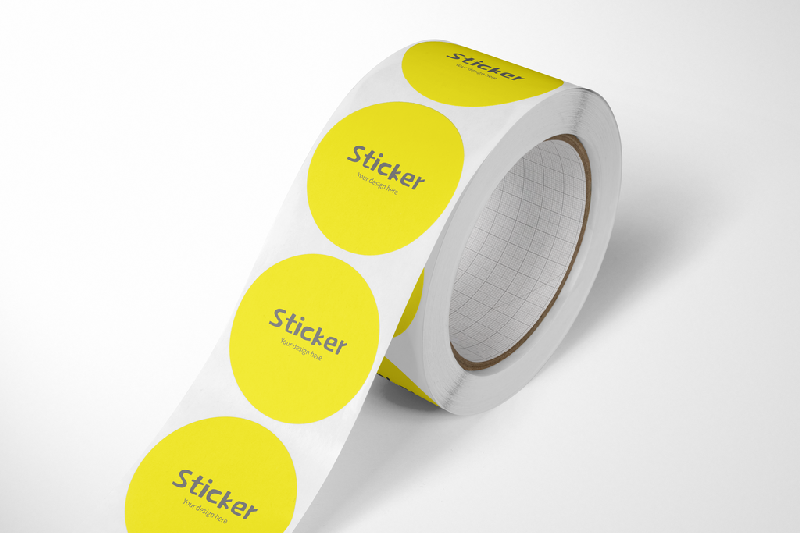
The IECHO LCT Series metal RF laser die-cutting machine is compatible with over 95% of self-adhesive label materials on a single unit. It seamlessly integrates full cutting, kiss cutting, perforating, and engraving, completely breaking the processing limitations of single-purpose machines. Its core adaptability stems from a 300W metal RF laser system. Compared to traditional glass-tube lasers, the metal RF laser delivers stable and controllable energy output across a broad power adjustment range. It precisely matches output power to different thicknesses and material types: 45μm ultra-thin PET films can be kiss-cut with low power precision without puncturing the liner; 280g thick coated paper and brushed metallic paper can be full-cut stably at full power, leaving clean, smooth edges free of burrs or carbonization, avoiding processing flaws such as film melting/sticking or incomplete paper cuts. The laser working platform is made of high-precision aluminum alloy with uniform flatness, ensuring identical die-cutting depth across the entire web, consistent depth within the same batch, and reliable finished quality.
The machine features a built-in segmented material process database that stores optimal processing parameters for each self-adhesive category. This includes feeding speed, laser power, kiss-cutting depth, fly-cutting speed, and web-guiding sensitivity across more than ten mainstream materials, including coated paper, synthetic paper, craft paper, transparent PET, frosted PET, PP, BOPP, brushed gold/silver, and holographic film. When changing materials, operators simply select the corresponding material name in the system, and the machine calls up preset processes with a single click. This eliminates the need for experienced technicians to repeatedly adjust laser, tension, and speed parameters based on trial and error, greatly saving setup time and enabling even beginners to produce qualified products consistently.
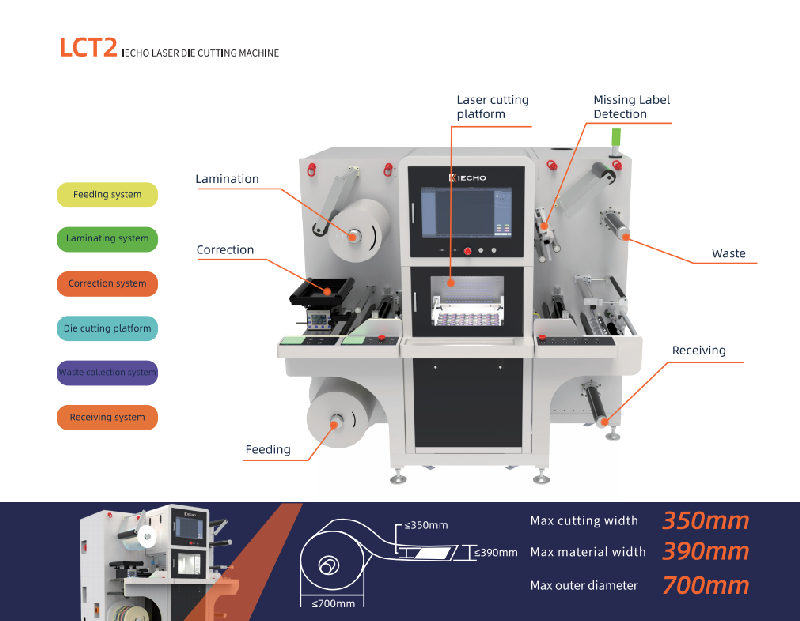
The web-feeding system is optimized for differences between soft and hard materials. The smart magnetic powder tension controller flexibly adjusts tension levels: tension is reduced for ultra-thin films to avoid stretching deformation, while tension is increased for thick metallic or cardstock papers to prevent loosening and wrinkling. The ultrasonic smart web-guiding system is unaffected by material transparency; it stably detects position on transparent films and matte linerless metallic papers alike, continuously correcting web deviation. Cutting accuracy remains stable at around 0.1 mm across various materials without scrap caused by changing material properties. Two models cover different processing needs in tiers: the new compact LCT2 caters to basic label processing (coated paper, PET, gold/silver paper) for small shops, featuring laminating, slitting, and missing-label detection as standard to meet most daily chemical, food, and e-commerce orders; the extended LCT350 mass-production model supports optional UV varnishing and UV cold foiling modules for high-end specialty composite labels, offering a one-stop solution for foiling, varnishing, and die-cutting to handle high-margin specialty orders. The entire series supports design files in formats such as AI, PDF, and DXF, allowing direct processing of irregular shapes, hollow-outs, and multi-layer composite labels without requiring physical dies.
For label printing plants dealing with complex material orders while balancing standard and high-end specialty jobs, there is no need to split processing across multiple machines. A single IECHO LCT Series laser die-cutting machine can fulfill all material requirements, reducing equipment purchasing costs, saving floor space, simplifying shop production workflows, broadening order intake, and creating a one-stop label processing capability for all materials.